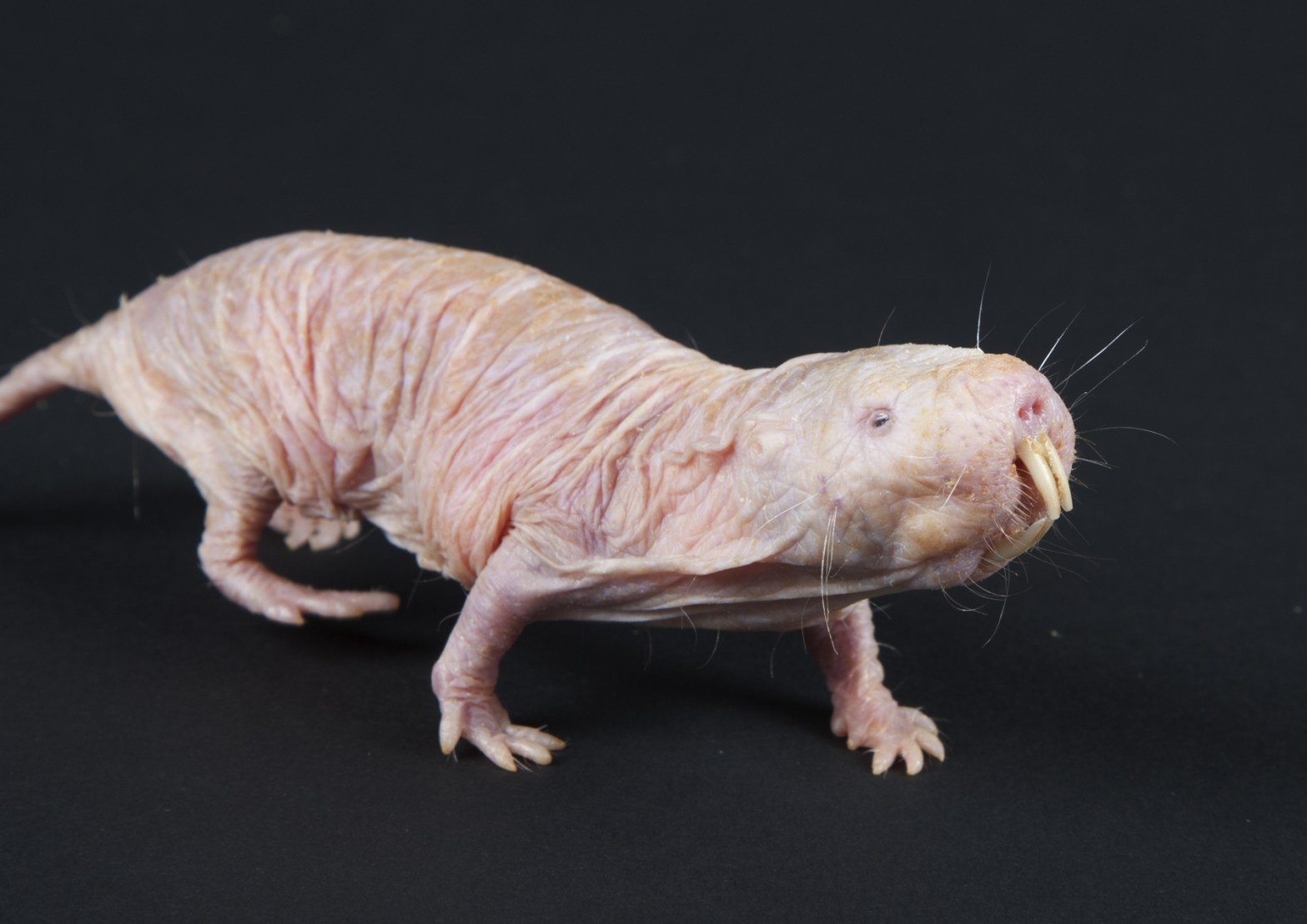
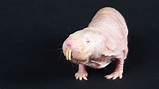
Naked mole rats are tiny, wrinkly, naked burrowing mammals that live in Eastern Africa. They are incredible. Here is an introduction to the naked mole rat, but be aware: this short piece barely scratches the surface of the amazingness of these extraordinary mammals.

Eusociality
The term eusociality is normally associated with insects. Bees are eusocial, as are ants and termites. A eusocial species is one in which the majority of the members of a group work together to help a small minority. The individuals in a eusocial group are very highly related, which helps to explain why eusociality evolved – as the individuals are so closely related, the offspring they are working together to raise carry very similar genetic information to their own. Therefore, not only will their genetic information be passed on to the next generation (i.e. they will have high ‘fitness’) but the offspring are more likely to survive due to the level of care they receive.
Naked mole rats are one of the only eusocial mammals! Colonies can be made up of up to 300 extremely closely related individuals [1]. These workers all serve a single queen, the only female in the colony to breed. The workers forage for the large tubers the colony feeds on, expand the burrows by scraping the earth with their huge external incisors, clean and sanitise the burrows and care for the queen’s offspring [1].
Cancer
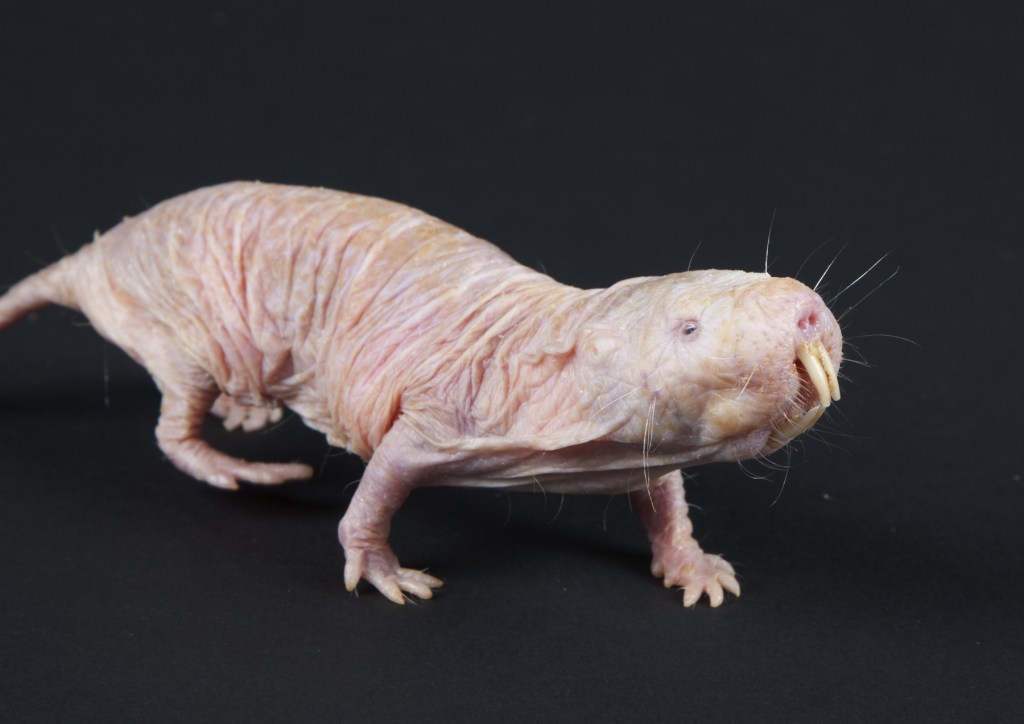
No natural cancer has been found in any naked mole rat [2]. There have even been studies in which tumorous cells or cancer causing genes (oncogenes) have been deliberately put into naked mole rats, however, even then the naked mole rats have not developed cancer [3]. Naked mole rats have shown no natural incidence of cancer due to the structure of certain molecules (hyaluronan) in their extracellular matrix, which causes the cells to stop proliferating at low cell densities, preventing the progression of tumours. This ‘contact inhibition’ occurs at cell densities three times lower than is seen in mouse models [2, 4]. The naked mole rat also has a gene that suppresses tumour growth, p53. P53 is a common gene, however it is expressed at very high levels in naked mole rats, which contributes to their contact inhibition [5].
Naked mole rats may make good models for human cancer treatments. Despite showing fundamentally distinct anti-cancer mechanisms and completely different cancer occurrence rates than humans, mice are used as the standard model in the study of human cancers [4]. A naked mole rat would be a better model for human cancer because, despite the negligible cancer occurrence rate [6], the systems utilised by naked mole rats and humans to combat excessive cell proliferation are more similar than those mechanisms used by mice [4]. Furthermore, naked mole rats and humans also have similar longevity quotients (i.e. they both have long lives for their relative mass) which would allow the development of cancers over a longer lifetime to be effectively studied [7].
Hypoxia
Hypoxia occurs when there is little to no oxygen present. As out cells rely on oxygen to produce energy in respiration, hypoxic conditions are very dangerous. In mammals, hypoxic conditions are generated when ischemia occurs and blood vessels are blocked, preventing the flow of oxygen-rich blood to tissues. Not only is the lack of oxygen a problem, but imbalances in ion concentration gradients caused by ischemia can be dangerous [8]. Much of the damage is caused by reperfusion after the ischemia – high calcium levels in the cells result in the production of proteins that lead to apoptosis or necrosis (cell death) [9, 10].
Naked mole rats seem to be immune to this sort of injury – they are very tolerant of low oxygen levels. This tolerance is due to several different factors. Firstly, naked mole rats have very low metabolic rates which means they consume relatively low amounts of oxygen [11]. Furthermore, the haemoglobin in their blood binds oxygen very strongly, allowing the naked mole rats to make the most of what is available [11]. To protect the body from high levels of CO2 (high levels of CO2 are acidic), the blood of naked mole rats are able to buffer against excess acid [12].
However, the most impressive and unique capability is the ability of the naked mole rat to function normally under low oxygen conditions, and for the brain to recover complete neural activity after pretty much anoxic (no oxygen at all) conditions [11]. This recovery is thought to be due to the naked mole rat might be able to slow down brain activity when there is little to no oxygen around, which helps slow the spread of damage. Interestingly, human cells can do a similar thing, however only in foetuses and neonates – this ability is lost soon after birth [9].
It is likely that this resistance evolved due to the environment the naked mole lives in: very crowded burrows with low oxygen yet high carbon dioxide levels [13]. This resistance means that not only can they tolerate their burrows, they in fact can thrive in them. However, fully understanding how these mechanisms work could result in the development of new treatments for stroke in humans.
Pain
Pain is an essential component of life. It protects our bodies from damage and alerts us to disease. It is, of course, distressing, and is sadly a by produce of many diseases and their treatment. Pain occurs when free nerve ending, nociceptors, signal tissue damage caused by mechanical, thermal or chemical stimuli [14]. Naked mole rats have certain unique mechanisms that mean that they are highly resistant to certain forms of pain, and therefore could be used as a model in the development of new drugs.
Naked mole rats live in crowded and poorly ventilated burrows which high CO2 levels, allowing films of acid to form on moist tissues such as the eyes and the nose [15]. However, the animals do not show any behavioural response to this, nor do they make any effort to avoid acidic fumes [16]. This is due to the naked mole rat’s nerve fibres. Not only do they have few of the pain causing nerve fibres, they also lack the signalling molecules (neuropeptides) that cause the fibres to become enervated in the skin [17]. The naked mole rats also show a unique functional connectivity of C-fibres to the spinal column [15]. All in all, naked mole rats are very interesting in the study of new pain-relief drugs.
Ageing
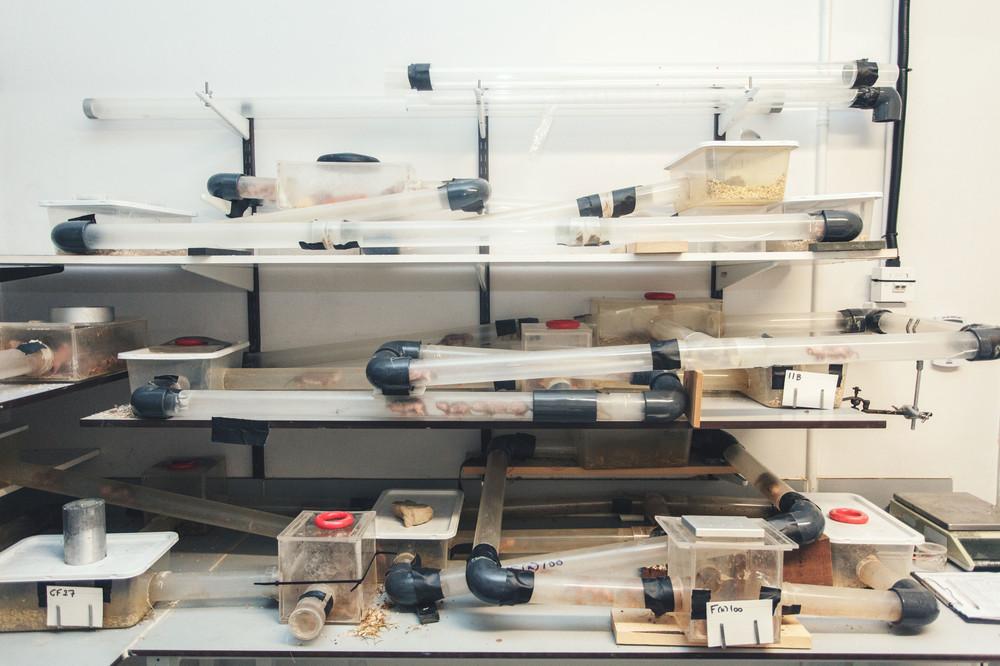
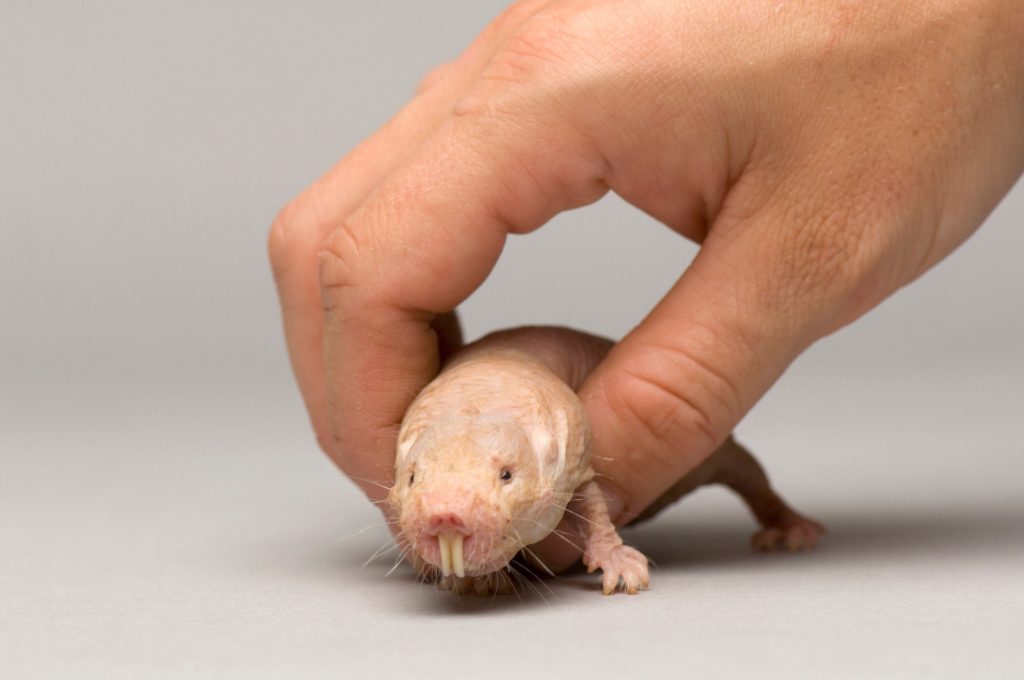
Naked moles rats are teeny tiny: on average they weigh just 35 g, however, they can live for over 28 years [4]! This is a lifetime nine times longer than similarly sized rodents! Some labs across the world have artificial colonies made out of clear Perspex tubing which allows for easy observation of the naked mole rats. These artificial burrows require high levels of maintenance – the naked mole rats gnaw away at the connecting tubes until they are through the plastic! Although extremely interesting, they can be a bit of a nightmare to work with. Observations have shown that in the lab, naked mole rats can live for over 30 years and over this time they show little or no ageing [4]. This slow ageing could be down to the animal’s eusocial lifestyle, or due to the high levels of inbreeding seen in colonies. However, what is striking is that naked mole rats have high levels of oxidative damage from a very young age, which is very different from humans, which accumulate oxidative damage slowly over a lifetime [18]. The naked mole rat seems to be protected due to the high levels of a certain amino acid – cysteine – in their cells [18]. These protein residues could be acting as buffers against oxidative damage [1].
Are you impressed yet?
Understanding the mechanisms employed by naked mole rats could give an insight into new treatments and therapies for a range of diseases, including stroke, heart attack, cancer and even ageing! I hope this has managed to convince you how cool naked mole rats are! They are just the best. This article has only scratched the surface of how cool they are, I will write some follow up articles talking more about their ecology that will similarly blow your mind.
References
1. Husson, Z., L.-N. Schuhmacher, and E.S.J. Smith, The naked mole-rat as an animal model in biomedical research: Current perspectives. Open Access Animal Physiology, 2015: p. 137-137.
2. Seluanov, A., et al., High-molecular-mass hyaluronan mediates the cancer resistance of the naked mole rat. Nature, 2013. 499(7458): p. 346-349.
3. Hornsby, P.J., et al., Resistance to experimental tumorigenesis in cells of a long-lived mammal, the naked mole-rat (Heterocephalus glaber). Aging Cell, 2010. 9(4): p. 626-635.
4. Gorbunova, V., et al., Hypersensitivity to contact inhibition provides a clue to cancer resistance of naked mole-rat. Proceedings of the National Academy of Sciences, 2009. 106(46): p. 19352-19357.
5. Buffenstein, R., et al., Stress resistance in the naked mole-rat: The bare essentials ? A Mini-Review. Gerontology, 2012. 58(5): p. 453-462.
6. Treuting, P.M., et al., Initial case reports of cancer in naked mole-rats (Heterocephalus glaber). Veterinary Pathology, 2016. 53(3): p. 691-696.
7. Buffenstein, R., Negligible senescence in the longest living rodent, the naked mole-rat: Insights from a successfully aging species. Journal of Comparative Physiology B, 2008. 178(4): p. 439-445.
8. Pisani, A., P. Bonsi, and P. Calabresi, Calcium signaling and neuronal vulnerability to ischemia in the striatum. Cell Calcium, 2004. 36(3-4): p. 277-284.
9. Larson, J., T.J. Park, and B.L. Peterson, Adult naked mole-rat brain retains the NMDA receptor subunit GluN2D associated with hypoxia tolerance in neonatal mammals. Neuroscience Letters, 2012. 506(2): p. 342-345.
10. Vanlangenakker, N., et al., Molecular mechanisms and pathophysiology of necrotic cell death. Current Molecular Medicine, 2008. 8(3): p. 207-220.
11. Park Thomas J.Larson, J., Extreme hypoxia tolerance of naked mole-rat brain. NeuroReport, 2009. 20(18): p. 1634-1637.
12. Johansen, K.A.l.o.t.a.w., et al., Blood respiratory properties in the naked mole rat Heterocephalus glaber, a mammal of low body temperature. Respiration Physiology, 1976. 28(3): p. 303-314.
13. Park, T.J., et al., No oxygen? No problem! Intrinsic brain tolerance to hypoxia in vertebrates. Journal of Experimental Biology, 2014. 217(7): p. 1024-1039.
14. Mense, S., Algesic agents exciting muscle nociceptors. Experimental Brain Research, 2009. 196(1): p. 89-100.
15. Park, T.J., et al., Selective inflammatory pain insensitivity in the African naked mole-rat (Heterocephalus glaber). Plos Biology, 2008. 6(1): p. 156-170.
16. Thomas, P., Blunted behavioral and Trigeminal responses to Acidic fumes in the African naked mole-rat. Frontiers in Behavioral Neuroscience, 2012. 6.
17. Park, T.J., et al., Somatosensory organization and Behavior in naked mole-rats: II. Peripheral structures, innervation, and selective lack of neuropeptides associated with thermoregulation and pain. Journal of Comparative Neurology, 2003. 465(1): p. 104-120.
18. B, A., et al., High oxidative damage levels in the longest-living rodent, the naked mole-rat. 2006, Aging Cell: New York. p. 463-71.
 Flora's Science Digest